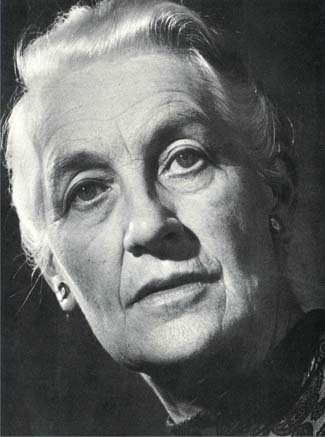
Janet McNeill
Janet McNeill was born in Dublin in 1907 where her father was minister of the Adelaide Road Presbyterian Church. In 1913 the Rev. William McNeill was appointed to Trinity Church in Birkenhead and the family moved to England.
Janet went to St Andrews University where she took a Classics degree while writing and acting for the university’s College Players. She was awarded a First class degree and stayed on to take a Masters’ degree. Her father had returned to Northern Ireland in 1924 but health problems led to his retirement from the Church in 1930, as a result Janet moved to Belfast where she was employed by the Belfast Telegraph. She first worked as a typist before becoming secretary to the proprietor, Sir Robert Baird.
In 1933 Janet married Robert Alexander and left her job to start a family. Janet had received a typewriter from her father (who knew of her ambition to write) as a wedding gift but she would not write seriously until her children were at school. After winning a BBC competition in 1951 Janet McNeill began to write. Initially she wrote radio plays, which were regularly broadcast on the Home Service, and several of her later novels began as plays.
In 1953 she suffered a brain haemorrhage and after recovering her first books (a novel for adults, A Child in the House, and My Friend Specs McCann, a children’s book) were published in 1955. Alongside her writing Janet McNeill also served as a Justice of the Peace (for the juvenile court), and was a member of the advisory council of the BBC from 1959 to 1964. Better known as a writer for children, her character Specs McCann was the basis for a newspaper cartoon strip (illustrated by Rowel Friers) while she wrote the libretto for a children’s opera Finn and the Black Hag (based on a short story by Eileen O’Faolain), Janet McNeill published ten novels for adults, including Tea at Four O’Clock (which was published as a Virago Modern Classic in 1988).
In 1964, after her husband’s retirement, the couple left Northern Ireland to live in Bristol. The Small Widow is the only of her novels to be written outside Northern Ireland. It was published in 1967, anticipating many of the concerns of the 1970’s women’s movement in its awareness of the restricted role of women in the traditional family and marriage. Janet McNeill wrote no further novels, though she continued to publish children’s books, as she struggled with health problems.
Janet McNeill died in 1994.
“Simply elegant… Janet McNeill ought to be better appreciated.” Irish Times

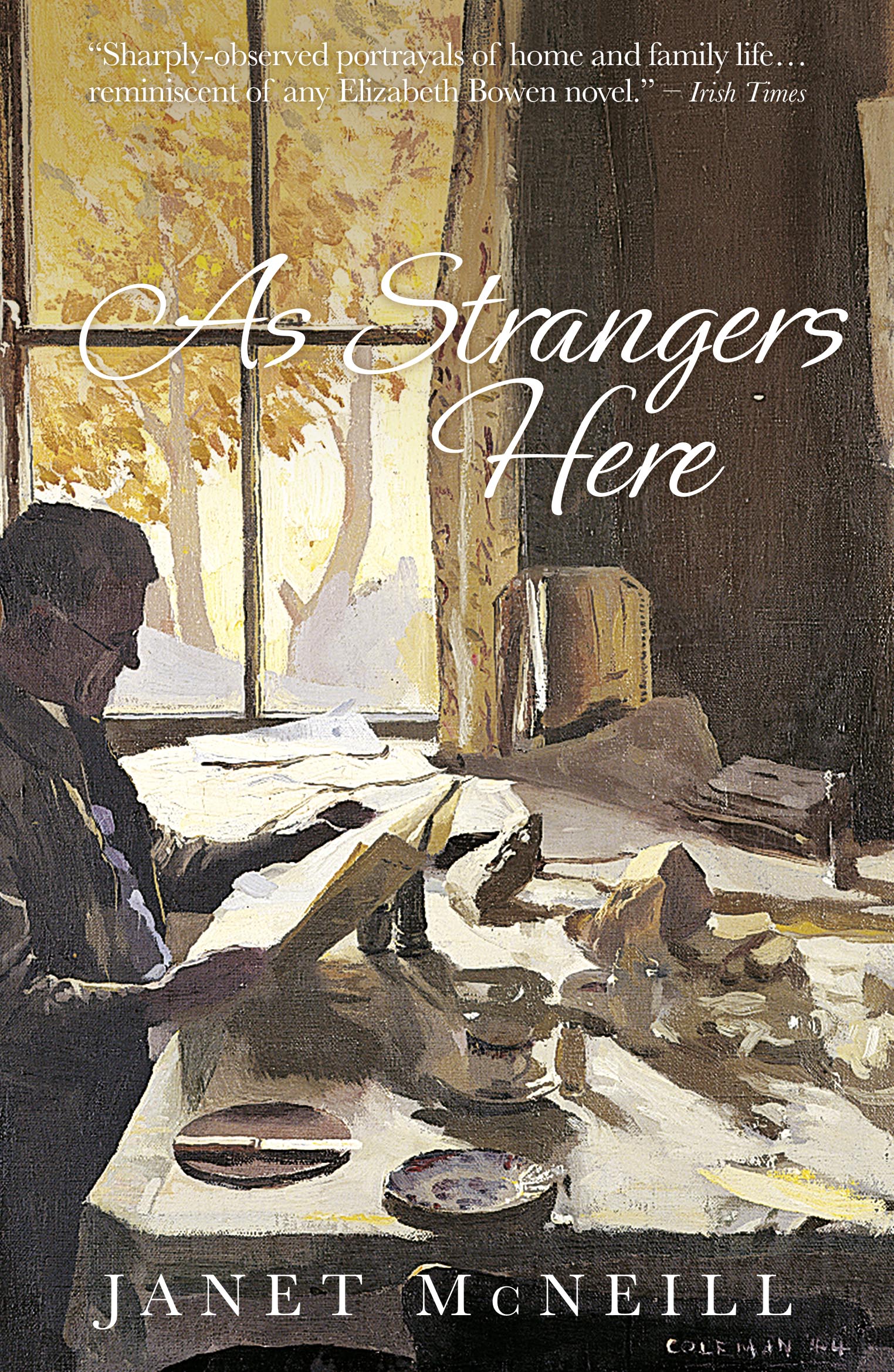

Sarah Vincent is fifty and, like her group of friends, she is resigned to the absurdities of middle-age but over the course of a summer Sarah discovers that life can shatter the past, deeply-held faiths are destroyed and she discovers that new beginnings, and new love, have always existed for her.

Mildred has died but her shadow still dominates the life of Laura, her younger sister. When George, her brother, returns Laura remembers her youthful failure to assert an independent life. Was it cowardice or self-sacrifice? In reclaiming her past can Laura begin to shape her present? Can Laura, at last, live without guilt?
In portraying such private dramas Tea at Four O’Clock is Janet McNeill’s most perceptive novel of family life.
“The gates of her prison were open, but she lacked the courage to go through them to whatever new country was waiting for her on the other side.”